Walnut Tree Nutrition and Causes of Black Walnut Kernels: A Complete Guide to Fertilization, Irrigation, and Prevention
Learn about walnut tree nutrition, fertilization and irrigation, the main causes of black walnut kernels, and practical ways to improve kernel quality.
Walnut is one of the most valuable nut crops grown in temperate regions around the world. Producing high-quality walnuts with well-filled, healthy, light-colored kernels depends on much more than choosing the right cultivar.
Factors such as walnut tree nutrition, irrigation management, soil conditions, root health, climate, orchard management, harvest timing, and postharvest practices can all influence final yield and kernel quality.
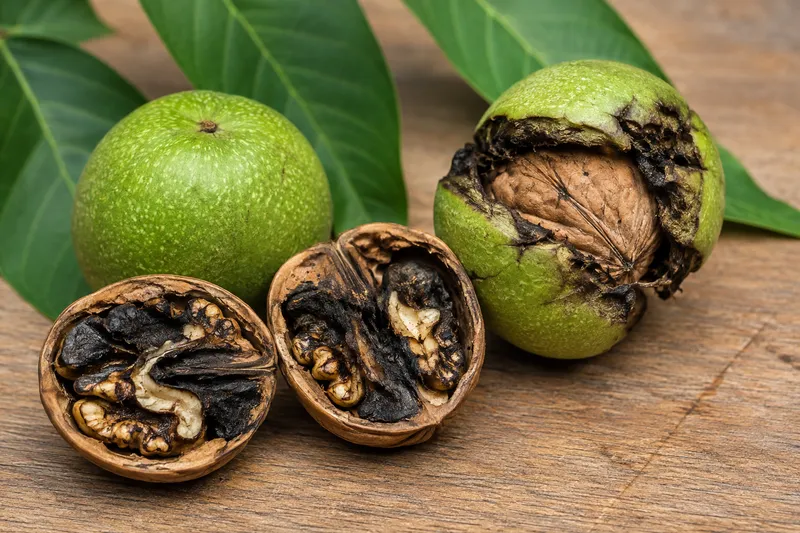
One of the most concerning quality problems for walnut growers is kernel darkening or blackening. Dark or black walnut kernels generally have lower visual quality and market value and may indicate problems that occurred during crop development, harvest, drying, or storage.
For this reason, producing high-quality walnuts requires an integrated management strategy beginning with soil and root health and continuing through harvest and postharvest handling.
Botanical Characteristics of the Walnut Tree
The scientific name of the Persian or English walnut is:
Juglans regia L.
Family:
Juglandaceae
Walnut is a large deciduous tree belonging to the broadleaf group. Under favorable growing conditions, mature trees can develop substantial height, trunk diameter, and a broad canopy.
Walnut trees generally develop a strong trunk and extensive crown as they mature.
The leaves are large and compound, while the appearance of the bark changes as the tree ages. Young branches tend to have smoother bark, whereas older trunks develop a grayer color and increasingly visible fissures.
Juglans regia is one of the world's most important edible walnut species and is widely cultivated for its nutritious and economically valuable kernels.
Flowers and Pollination in Walnut Trees
Walnut trees are monoecious, meaning that separate male and female flowers occur on the same tree.
Male flowers typically develop in catkins, while female flowers are generally produced near the tips of current-season shoots.
The timing of pollen release and female flower receptivity can influence successful pollination and fruit set.
Because flowering patterns vary among walnut cultivars, proper cultivar selection and the use of suitable pollinizers can be important when establishing a commercial walnut orchard.
Economic Importance of Walnut Production
Walnuts are valuable not only because of their edible kernels but also because different parts of the tree have various commercial uses.
Walnut kernels are consumed directly and are widely used in:
- confectionery,
- bakery products,
- processed foods,
- and walnut oil production.
Walnut wood is also highly valued in woodworking and furniture production because of its appearance and physical characteristics.
Leaves, hulls, shells, and other parts of the walnut tree have also been used in various traditional and industrial applications.
However, in commercial walnut production, kernel quality is particularly important.
Kernel characteristics such as:
- color,
- size,
- kernel fill,
- appearance,
- flavor,
- and overall condition
can strongly influence marketability and economic value.
For this reason, problems such as dark or black walnut kernels can result in significant quality losses.
Suitable Climate for Walnut Trees
Climate is one of the most important factors determining whether a location is suitable for walnut production.
Walnut trees perform best in areas where the chilling requirements of the selected cultivar can be satisfied during winter while severe spring frost and excessive summer heat are avoided during sensitive developmental stages.
Therefore, simply describing a region as "cold" or "warm" is not sufficient for determining its suitability for walnut production.
Several climatic factors should be considered together, including:
- winter temperatures,
- late spring frost risk,
- summer temperatures,
- length of the growing season,
- elevation,
- humidity,
- rainfall amount and distribution,
- and availability of suitable irrigation water.
The selected walnut cultivar should also be adapted to the climatic conditions of the production area.
Late Spring Frost Damage in Walnut Orchards
Late spring frost is an important production risk in many walnut-growing regions.
After budbreak, newly developing tissues become more vulnerable to freezing temperatures.
Severe frost during this period can damage:
- emerging shoots,
- young leaves,
- flowers,
- and developing reproductive tissues.
As a result, spring frost can significantly reduce fruit set and final yield.
Budbreak timing varies among walnut cultivars. In areas with a history of late spring frost, cultivar selection therefore becomes particularly important.
Late-leafing cultivars may offer advantages in some frost-prone environments, although cultivar selection should always consider the complete set of local growing conditions.
Effects of Excessive Heat on Walnut Quality
High summer temperatures can place walnut trees under considerable stress, especially when heat is accompanied by insufficient soil moisture.
This becomes particularly important during nut development and kernel filling.
If walnut trees experience substantial water stress during sensitive stages of nut development, kernel growth and final quality may be negatively affected.
For this reason, preventing severe water stress during critical stages of crop development is an important component of walnut orchard management.
Heat alone, however, should not automatically be considered the sole cause of poor kernel quality. Irrigation, cultivar, tree health, canopy condition, and other environmental factors should also be evaluated.
Best Soil for Walnut Trees
Walnut trees require favorable physical and chemical soil conditions for optimal growth.
One of the most important characteristics is adequate effective soil depth.
Walnut trees can develop extensive root systems, and shallow soil or restrictive layers may limit root development and reduce the volume of soil available for water and nutrient uptake.
Deep, well-drained soils with favorable structure generally provide better conditions for root development.
In contrast, shallow soils, compacted layers, poor drainage, or other physical restrictions may limit tree growth and productivity.
Why Is Soil Depth Important for Walnut Trees?
The larger the volume of soil that roots can effectively explore, the greater the potential access to water and mineral nutrients.
A well-developed root system can improve access to nutrients such as:
- nitrogen,
- phosphorus,
- potassium,
- calcium,
- magnesium,
- and other essential elements.
For this reason, evaluating the soil profile before establishing a walnut orchard can be extremely valuable.
If root development is severely restricted by shallow soil or a hard subsurface layer, simply increasing fertilizer application may not correct the underlying problem.
Effects of Stones and Gravel in Walnut Orchard Soils
A high proportion of stones and gravel can reduce the effective volume of soil available for root development and water storage.
However, the presence of gravel alone does not necessarily mean that a soil is unsuitable for walnut production.
Important factors include:
- the percentage of stones and gravel,
- their distribution through the soil profile,
- effective soil depth,
- soil texture,
- water-holding capacity,
- and drainage.
Where the effective soil volume is severely restricted, irrigation and nutrient management may become more challenging.
Effects of Calcareous Soil and High pH on Walnut Nutrition
Soil chemistry has a major influence on nutrient availability.
In calcareous soils and soils with high pH, the availability of certain nutrients—particularly some micronutrients—may become limited.
An important principle of plant nutrition is:
The presence of a nutrient in the soil does not necessarily mean that it is readily available for plant uptake.
A soil may contain a substantial total amount of a nutrient while chemical conditions reduce its availability to roots.
As a result, walnut trees may develop nutrient-deficiency symptoms even when the nutrient has not been completely depleted from the soil.
For this reason, walnut fertilization decisions should ideally consider soil testing, irrigation water quality, and, when appropriate, leaf tissue analysis.
Soil Drainage and Walnut Root Health
Good drainage is essential for maintaining a healthy walnut root system.
Prolonged soil saturation reduces oxygen availability around roots and can create unfavorable conditions for normal root function.
Healthy roots are essential for effective uptake of both water and mineral nutrients.
If root function is impaired by:
- waterlogging,
- poor drainage,
- soil compaction,
- root diseases,
- salinity,
- or oxygen deficiency,
even an intensive fertilizer program may fail to produce the expected response.
Successful walnut nutrition therefore begins with maintaining a healthy root environment.
Walnut Tree Propagation
Walnut trees can be propagated through both sexual and vegetative methods.
Sexual propagation involves growing plants from seed.
One major limitation of seed propagation for commercial cultivar production is the high level of genetic variability among seedlings.
A walnut tree grown from seed does not necessarily reproduce all of the desirable characteristics of the parent tree.
Seedling trees may also have a relatively long juvenile period before reaching regular commercial production.
Using Walnut Seedlings as Rootstocks
Walnut seeds can be used to produce rootstocks, onto which selected cultivars are subsequently grafted.
Vegetative propagation through grafting makes it possible to maintain the genetic characteristics of a selected cultivar.
Rootstock and cultivar selection should consider:
- climate,
- soil conditions,
- disease concerns,
- orchard objectives,
- and regional adaptation.
For commercial orchard establishment, choosing suitable plant material is one of the most important long-term management decisions.
Damavand Walnut Cultivar
Damavand is one of the Iranian walnut cultivars that has received attention in domestic walnut production.
When evaluating a walnut cultivar, growers should consider characteristics such as:
- yield potential,
- kernel quality,
- budbreak timing,
- harvest date,
- winter cold tolerance,
- susceptibility to spring frost,
- and adaptation to local conditions.
Cultivar selection should not be based solely on nut size or kernel appearance.
A cultivar with excellent nut characteristics may still perform poorly if it is not adapted to the climatic conditions of the orchard.
Walnut Tree Irrigation
Irrigation is one of the most important components of walnut orchard management.
During the growing season, walnut trees require adequate water to maintain:
- leaf activity,
- shoot growth,
- nut development,
- kernel filling,
- and overall tree function.
The irrigation program should be adjusted according to:
- tree age and canopy size,
- soil texture,
- effective soil depth,
- weather conditions,
- evapotranspiration,
- rainfall,
- crop-development stage,
- irrigation system,
- and irrigation water quality.
Therefore, there is no single fixed irrigation interval that is appropriate for every walnut orchard.
Drip Irrigation for Walnut Trees
A properly designed and managed drip irrigation system can provide controlled water delivery to the active root zone.
As walnut trees become larger, the wetted soil volume should generally expand to reflect the development of the root system.
Providing all irrigation water through a very small wetted area close to the trunk of a mature tree may not adequately supply the active root zone.
Irrigation system design should therefore evolve with tree size and orchard development.
Flood and Surface Irrigation in Walnut Orchards
Traditional walnut orchards may use surface or flood irrigation systems.
One important consideration in these systems is avoiding prolonged water accumulation directly around the trunk and crown area.
Persistently saturated soil around the root crown can create unfavorable conditions for root and crown health.
Water should therefore be managed to satisfy crop requirements without creating prolonged soil saturation.
When Should Walnut Irrigation Begin?
There is no universal calendar date for starting irrigation in all walnut orchards.
The appropriate time depends on:
- spring rainfall,
- stored soil moisture,
- local climate,
- soil characteristics,
- root-zone moisture,
- and the beginning of active tree growth.
In some regions, irrigation may need to begin relatively early, while in others, spring rainfall may provide sufficient soil moisture for a longer period.
The decision should therefore be based on actual soil moisture and crop water demand, rather than a fixed date.
Importance of Irrigation During Kernel Development
One of the most important periods for water management is the stage of nut development and kernel filling.
In many walnut-growing regions, this period coincides with high summer temperatures.
As a result, trees may experience their greatest atmospheric water demand at the same time that kernel development is progressing rapidly.
Severe water stress during this period can negatively affect crop development and final kernel quality.
Irrigation should therefore be managed consistently according to actual crop demand and soil moisture conditions.
Relationship Between Irrigation and Black Walnut Kernels
When investigating the causes of black walnut kernels, irrigation management is one of the factors that should be evaluated.
Water stress during nut and kernel development, particularly when combined with high temperatures, may negatively affect final kernel quality.
However, kernel blackening should not be attributed to water stress alone.
Dark or black kernels can result from multiple interacting factors.
A proper diagnosis should consider:
irrigation + nutrition + tree health + environmental stress + harvest timing + postharvest handling and storage
Understanding this distinction is important because simply increasing irrigation or fertilizer application may not correct the problem if the underlying cause occurs during harvest, drying, or storage.
The next sections of this guide examine walnut nutrition in greater detail and then address the major causes of dark and black walnut kernels and the practical steps growers can take to reduce the risk.
Part 2: Walnut Tree Nutrition and Essential Nutrients for Healthy Growth and Yield
Proper walnut tree nutrition is one of the most important factors affecting tree health, vegetative growth, yield, and kernel development. Walnut trees require a balanced supply of macro- and micronutrients to support root growth, canopy development, flowering, fruit set, nut development, and kernel filling.
However, applying more fertilizer does not necessarily produce higher yields or better-quality walnuts.
Effective fertilization depends on selecting the right nutrient source, appropriate rate, suitable timing, and correct application method according to the actual requirements of the orchard.
For this reason, a walnut fertilization program should ideally consider soil testing, irrigation water quality, leaf tissue analysis, tree age, crop load, previous fertilizer applications, and local environmental conditions.
Why Is Walnut Tree Nutrition Important?
Walnut is a perennial tree that continuously uses mineral nutrients to support both annual crop production and long-term vegetative development.
Essential nutrients contribute to processes such as:
- root development,
- shoot and leaf growth,
- formation of fruiting buds,
- flowering,
- fruit set,
- nut development,
- kernel filling,
- maintenance of photosynthetically active leaves,
- and preparation of the tree for the following growing season.
A deficiency of one or more essential nutrients can restrict tree performance.
At the same time, excessive application of certain nutrients may disturb nutritional balance or increase salt concentrations in the root zone.
The objective should therefore be balanced walnut nutrition, rather than maximizing fertilizer input.
Soil Testing: The First Step in Walnut Fertilization
Before designing a fertilizer program, growers should understand the physical and chemical conditions of the orchard soil.
A soil test can provide useful information about characteristics such as:
- soil pH,
- electrical conductivity (EC),
- organic matter,
- nutrient status,
- soil texture,
- calcium carbonate or lime content,
- and other relevant soil properties.
However, soil testing alone does not always provide a complete picture of the nutritional status of mature walnut trees.
For perennial orchards, leaf tissue analysis can provide valuable complementary information.
Importance of Leaf Analysis in Walnut Orchards
Leaf analysis can help determine the nutrient concentrations actually present in plant tissues.
This distinction is important because a nutrient may be present in the soil but remain poorly available to roots because of factors such as:
- high soil pH,
- salinity,
- unfavorable soil moisture,
- impaired root function,
- or interactions among nutrients.
For more precise nutrient management, growers can evaluate:
soil analysis + leaf tissue analysis + irrigation water analysis + visual orchard observations
together rather than relying on a single source of information.
Sampling procedures and interpretation standards should also be appropriate for walnut and the local production region.
Essential Nutrients for Walnut Trees
Like other fruit and nut crops, walnut trees require a range of essential mineral nutrients.
Important nutrients commonly considered in walnut orchard management include:
- Nitrogen (N)
- Phosphorus (P)
- Potassium (K)
- Calcium (Ca)
- Magnesium (Mg)
- Sulfur (S)
- Iron (Fe)
- Zinc (Zn)
- Boron (B)
- Manganese (Mn)
- Copper (Cu)
Each nutrient performs different physiological functions, and both deficiency and imbalance can negatively affect tree performance.
Role of Nitrogen in Walnut Trees
Nitrogen (N) is an essential macronutrient closely associated with vegetative growth and canopy development.
It is involved in proteins, chlorophyll, nucleic acids, and numerous compounds required for normal plant growth.
Adequate nitrogen nutrition helps support:
- leaf development,
- shoot growth,
- canopy function,
- and photosynthetic capacity.
However, excessive nitrogen application is not desirable.
Supplying substantially more nitrogen than the tree requires may encourage excessive vegetative growth and disturb the balance between vegetative and reproductive development.
Nitrogen should therefore be supplied according to orchard requirements rather than through a fixed fertilizer rate.
Best Time to Apply Nitrogen Fertilizer to Walnut Trees
The entire seasonal nitrogen requirement should not automatically be applied in a single large application.
Depending on the production system, nitrogen may be divided into applications that correspond more closely with tree demand during the growing season.
The appropriate timing and rate depend on factors such as:
- tree age,
- expected yield,
- leaf nitrogen status,
- soil conditions,
- nitrogen source,
- soil texture,
- irrigation method,
- and local climate.
For this reason, recommending the same amount of urea or another nitrogen fertilizer for every walnut orchard is not scientifically appropriate.
Role of Phosphorus in Walnut Nutrition
Phosphorus (P) is another essential macronutrient.
It plays important roles in:
- energy transfer,
- cellular metabolism,
- nucleic acids,
- and root development.
Phosphorus behaves differently from nitrogen in soil and generally has relatively limited mobility.
Soil pH and chemistry can strongly influence phosphorus availability.
For this reason, phosphorus fertilization should be based on actual orchard requirements rather than routine application.
High-Phosphorus Fertilizers for Walnut Trees
High-phosphorus fertilizers, including certain NPK formulations, may be included in a walnut nutrition program when additional phosphorus is required.
For example, formulations such as:
10-52-10
contain a relatively high proportion of phosphate.
However, the high phosphorus number on a fertilizer label does not by itself mean that the product is suitable for every walnut orchard.
The decision should consider:
- soil phosphorus status,
- soil pH,
- fertilizer source,
- application method,
- and actual crop requirements.
Unnecessary phosphorus application should be avoided.
Role of Potassium in Walnut Trees
Potassium (K) is an important macronutrient in walnut production and performs several physiological functions within the plant.
Potassium contributes to:
- regulation of plant water relations,
- stomatal function,
- enzyme activation,
- transport of photosynthetic products,
- ionic balance,
- and normal crop development.
Potassium management becomes particularly important during nut development and kernel filling.
However, potassium should be managed as part of a balanced nutrient program rather than as an isolated solution for improving kernel quality.
High-Potassium Fertilizer for Walnut Trees
When soil and plant information indicates a need for additional potassium, different potassium sources or high-potassium NPK fertilizers may be considered.
Common potassium sources include fertilizers such as:
- potassium sulfate,
- potassium nitrate,
- and high-potassium NPK formulations.
The most appropriate source depends partly on the accompanying nutrients.
For example:
Potassium nitrate supplies both potassium and nitrate nitrogen.
Potassium sulfate supplies potassium together with sulfur.
Therefore, the potassium source should be selected according to the complete fertilizer program rather than potassium concentration alone.
Role of Potassium in Walnut Kernel Development
During nut development and kernel filling, walnut trees must maintain adequate water relations and transport photosynthetic products from active leaves to developing nuts.
Potassium contributes to several physiological processes involved in these functions.
Adequate potassium nutrition can therefore support normal crop development when potassium availability is limiting.
However, potassium alone does not determine whether walnut kernels will be large, well-filled, or light in color.
Final kernel quality is also influenced by:
- irrigation,
- temperature,
- cultivar,
- canopy health,
- root health,
- overall nutrient balance,
- harvest timing,
- drying,
- and storage conditions.
For this reason, applying additional potassium should not be considered a guaranteed treatment for black or dark walnut kernels.
Role of Calcium in Walnut Nutrition
Calcium (Ca) is important for cell walls, membrane stability, cell signaling, and normal plant development.
Calcium nutrition should be considered together with soil properties, irrigation water, root activity, and the balance of other nutrient cations.
It is also important to distinguish between the total calcium present in a soil and overall nutrient availability.
A calcareous soil may contain large amounts of calcium carbonate while still presenting nutritional challenges associated with high pH and reduced availability of certain micronutrients.
Role of Magnesium in Walnut Trees
Magnesium (Mg) is the central atom in the chlorophyll molecule and is therefore essential for photosynthesis.
Adequate magnesium nutrition helps maintain healthy, functional foliage.
The balance among magnesium, potassium, and calcium should also be considered.
Under some conditions, excessive potassium availability can interfere with magnesium uptake.
Therefore, intensive potassium fertilization should not be planned without considering the magnesium status of the orchard.
Role of Zinc in Walnut Trees
Zinc (Zn) is an essential micronutrient involved in enzyme activity, growth regulation, and several metabolic processes.
Zinc availability can be limited in some high-pH and calcareous soils.
When zinc deficiency is confirmed, the appropriate correction method should be selected according to:
- severity of deficiency,
- soil conditions,
- growth stage,
- and local agronomic recommendations.
Micronutrients should not be applied excessively simply because they are required in small amounts.
Role of Boron in Walnut Trees
Boron (B) is another essential micronutrient and plays important roles in cell-wall development, growing tissues, and reproductive processes.
Boron management requires particular care because the range between inadequate and excessive concentrations can be relatively narrow.
For this reason, repeated or high-rate boron applications without evidence of need should be avoided.
Soil, water, and leaf analysis can provide useful information when evaluating boron nutrition.
Role of Iron in Walnut Trees
Iron (Fe) is essential for several metabolic processes associated with chlorophyll formation and photosynthetic function.
In calcareous or alkaline soils, iron may be present in the soil but remain poorly available to plant roots.
Under these conditions, walnut trees may develop symptoms of iron chlorosis, often characterized by interveinal yellowing of younger leaves.
However, yellow leaves should not automatically be diagnosed as iron deficiency.
Root problems, salinity, waterlogging, and other nutrient disorders can produce similar symptoms.
Correct diagnosis should therefore precede fertilizer treatment.
Are Foliar Micronutrients Necessary for Walnut Trees?
Foliar fertilization can be useful for supplying certain nutrients under specific conditions.
However, foliar spraying should not be treated as a mandatory practice for every walnut orchard.
The effectiveness and safety of foliar nutrient applications depend on factors such as:
- nutrient source,
- product formulation,
- concentration,
- crop growth stage,
- leaf condition,
- air temperature,
- humidity,
- and water quality.
Not every water-soluble fertilizer is automatically suitable for foliar application.
Product label directions and appropriate agronomic recommendations should always be followed.
Animal Manure and Walnut Tree Nutrition
Organic amendments and properly managed manure can contribute to soil fertility and may improve certain physical, chemical, and biological soil properties.
However, fresh or insufficiently decomposed manure should be used with caution.
Depending on its source and quality, poorly managed manure may:
- contain high concentrations of soluble salts,
- supply nutrients in unbalanced amounts,
- introduce weed seeds,
- contain undesirable pathogens,
- and create unfavorable conditions during decomposition.
If manure is used in walnut orchards, its maturity, nutrient composition, salinity, application rate, and placement should be considered.
Does Fresh Manure Cause Black Walnut Kernels?
It is important to distinguish between a potential orchard-management problem and a scientifically established direct cause.
Fresh or poorly decomposed manure can negatively affect the root environment under certain conditions, particularly through excessive salts, nutrient imbalance, or inappropriate application.
However, the claim that ammonia from fresh manure is absorbed with irrigation water directly into walnut fruits and then "breaks down the kernel oil," causing black kernels, is not an appropriate scientific explanation of walnut kernel blackening.
Black walnut kernels are generally a multifactorial quality problem.
Irrigation, heat stress, tree health, nutrition, harvest timing, hull removal, drying, and storage conditions may all need to be evaluated.
Fertilizing Walnut Trees During the Dormant Season
The dormant period can be useful for evaluating orchard soil conditions and planning the next season's nutrition program.
Depending on soil-test results and local management practices, this period may also be suitable for applying certain soil amendments or relatively immobile nutrients.
However, there is no universal dormant-season fertilizer mixture that should be applied to every walnut orchard.
The fertilizer program should consider:
- soil-test results,
- soil texture,
- organic matter,
- phosphorus and potassium status,
- tree age,
- previous yield,
- and the following season's production goals.
Spring Fertilization of Walnut Trees
As walnut trees resume active growth in spring, nutrient demand begins to increase.
Nitrogen management often becomes particularly relevant during this period, although the complete nutrient status of the tree should be considered.
Large fertilizer applications should not be made automatically without considering soil moisture, irrigation, and actual crop demand.
In orchards equipped for fertigation, dividing nutrients into multiple applications may allow greater control over nutrient delivery during the growing season.
Walnut Nutrition During Fruit Set
After successful fruit set, the developing crop becomes an increasingly important sink for water, carbohydrates, and mineral nutrients.
Nutrition should therefore continue according to crop demand.
However, focusing exclusively on potassium during this period is not appropriate.
Walnut trees still require balanced nutrition, and healthy roots and leaves remain essential for supporting developing nuts.
Walnut Nutrition During Kernel Filling
Kernel filling is one of the most important stages of walnut production.
During this period, successful orchard management depends on maintaining:
- adequate water availability,
- appropriate potassium nutrition,
- balanced nitrogen supply,
- other essential nutrients,
- healthy foliage,
- and a functional root system.
Severe water stress or major nutritional imbalance during kernel development can negatively affect crop quality.
The goal is to maintain conditions that allow the tree to continue normal kernel development rather than attempting to force kernel filling through excessive fertilizer application.
Is One NPK Formula Suitable for the Entire Walnut Growing Season?
No.
Walnut nutrient requirements change during the growing season.
The nutrient balance required during early vegetative growth is not necessarily the same as the balance required during nut development and kernel filling.
For this reason, using one NPK formulation throughout the entire season without considering tree requirements is not a precise nutrition strategy.
Fertilizer selection should reflect crop stage, nutrient status, soil conditions, and the overall orchard management program.
Three Principles of an Effective Walnut Fertilization Program
An effective walnut nutrition program is based on three fundamental principles:
Right timing + Right rate + Right application method
Determining these correctly requires reliable information about the orchard.
Soil testing, leaf analysis, irrigation water quality, root health, tree age, crop load, and fertilizer history should be considered together.
Successful fertilization does not mean applying the greatest possible quantity of fertilizer.
It means supplying the nutrients the tree actually requires, in appropriate amounts, at the appropriate stages of development.
Combined with consistent irrigation, healthy roots, and good orchard management, balanced nutrition provides the foundation for productive walnut trees and high-quality kernels.
Part 3: Causes of Black Walnut Kernels and How to Prevent Kernel Darkening
Black or dark walnut kernels are among the most important quality problems affecting commercial walnut production. Light-colored, healthy, well-filled kernels generally have greater visual appeal and market value, while excessive kernel darkening can reduce product quality and profitability.
An important point is that walnut kernel blackening usually does not have a single cause.
Kernel color and quality may be influenced by conditions during nut development as well as by harvest and postharvest management.
Potential contributing factors include:
- high temperatures during nut development,
- water stress,
- irregular irrigation,
- delayed harvest,
- delayed hull removal,
- improper drying,
- unfavorable storage conditions,
- certain diseases and pests,
- poor tree health,
- nutritional imbalance,
- and root-zone problems.
For this reason, diagnosing black walnut kernels requires evaluating the entire production process rather than focusing on one fertilizer or one management practice.
1. High Temperatures and Walnut Kernel Darkening
High temperatures can negatively affect walnut quality, particularly when trees are exposed to heat during sensitive stages of nut and kernel development.
In many walnut-growing regions, kernel development coincides with the hottest part of the growing season.
When excessive heat occurs together with insufficient soil moisture, trees may experience substantial physiological stress.
This combination can interfere with normal crop development and contribute to reduced kernel quality.
Therefore, in regions with hot summers, maintaining adequate tree water status becomes particularly important.
2. Water Stress and Black Walnut Kernels
Adequate irrigation is one of the most important management factors during walnut development.
As nuts develop and kernels begin to fill, walnut trees require sufficient water to maintain normal physiological activity.
If available soil moisture becomes severely depleted during this period, the tree may experience water stress.
The combination of water stress and high temperature can be particularly damaging.
Severe drought stress during kernel development may negatively affect kernel growth and overall quality.
However, water stress should not automatically be considered the only cause when dark kernels are observed.
3. Irregular Irrigation in Walnut Orchards
The total amount of irrigation water is important, but irrigation consistency also matters.
Allowing trees to experience substantial soil-water depletion followed by excessive irrigation is generally not an ideal irrigation strategy.
Irrigation scheduling should consider:
- soil texture,
- effective soil depth,
- tree age and canopy size,
- weather conditions,
- evapotranspiration,
- irrigation system,
- and stage of nut development.
For this reason, statements such as "walnut trees should always be irrigated every seven days" are too general.
The appropriate irrigation interval can vary significantly among orchards.
4. Importance of Water During Kernel Filling
Kernel filling is one of the most sensitive periods in walnut production.
During this stage, healthy leaves must continue photosynthesis while water and assimilates are transported to developing nuts.
Severe water stress can interfere with these processes and reduce final crop quality.
Maintaining appropriate root-zone moisture during kernel development is therefore an important component of walnut quality management.
5. Delayed Harvest and Dark Walnut Kernels
Harvest timing can have a major influence on final kernel quality.
Once walnuts reach the appropriate stage of maturity, unnecessary delays in harvest may increase the risk of quality deterioration.
Leaving mature walnuts on the tree or ground for an extended period can expose them to environmental conditions that may negatively affect the hull, shell, and kernel.
Delayed harvest can contribute to:
- reduced visual quality,
- kernel darkening,
- contamination,
- hull deterioration,
- and postharvest quality losses.
Harvest timing should therefore be based on crop maturity rather than convenience alone.
6. Delayed Hull Removal
Postharvest management begins immediately after walnuts are collected.
The green hull should be removed in a timely manner, and harvested walnuts should not remain unnecessarily in warm, moist conditions.
Delayed hulling can negatively affect nut appearance and overall quality.
In commercial production, efficient movement of harvested walnuts from the orchard to hulling and drying is an important part of preserving kernel quality.
7. Improper Drying After Walnut Harvest
Producing high-quality walnuts does not end at harvest.
After hull removal, walnuts should be dried appropriately to reduce moisture and prepare them for safe storage.
If drying proceeds too slowly and walnuts remain at relatively high moisture levels for an extended period, quality deterioration may occur.
Warm and humid postharvest conditions are particularly undesirable.
Effective drying should reduce moisture efficiently while avoiding conditions that unnecessarily damage kernel quality.
8. Poor Storage Conditions
Even walnuts that have good kernel color at harvest can deteriorate when stored under unsuitable conditions.
Walnut kernels contain substantial amounts of oil, including unsaturated fatty acids, making storage conditions particularly important for maintaining quality.
Important storage factors include:
- temperature,
- moisture and relative humidity,
- oxygen exposure,
- light,
- storage duration,
- and packaging conditions.
Appropriate storage helps preserve kernel color, flavor, aroma, and overall quality.
9. Oxidation and Walnut Kernel Quality
Walnut kernels are rich in unsaturated fatty acids.
While this contributes to their nutritional value, these lipids are also susceptible to oxidative deterioration.
Unfavorable storage conditions—particularly elevated temperature and prolonged exposure to oxygen—can accelerate oxidation.
Over time, oxidative reactions can negatively affect:
- flavor,
- aroma,
- color,
- and overall kernel quality.
This is one reason why postharvest management is just as important as orchard nutrition when the objective is to produce and maintain high-quality walnut kernels.
10. Nutritional Imbalance and Kernel Quality
Poor or unbalanced nutrition can reduce overall tree health and may indirectly affect the tree's ability to produce high-quality nuts.
Walnut trees require multiple essential nutrients throughout the growing season.
Focusing excessively on a single nutrient is therefore not a reliable strategy for improving kernel color or quality.
For example, applying large amounts of nitrogen or potassium without considering the balance of other nutrients does not guarantee better kernels.
The objective should be balanced plant nutrition based on actual orchard requirements.
11. Does Potassium Deficiency Cause Black Walnut Kernels?
Potassium is essential for several physiological functions, including:
- water regulation,
- stomatal function,
- enzyme activity,
- ionic balance,
- and transport of photosynthetic products.
Adequate potassium nutrition is therefore important for normal walnut development.
However, it is not scientifically appropriate to attribute every case of black walnut kernels directly to potassium deficiency.
If potassium deficiency is suspected, it should be evaluated using orchard observations together with soil and/or leaf analysis when appropriate.
Applying high-potassium fertilizer without identifying the actual cause of kernel blackening may fail to correct the problem.
12. Nitrogen and Walnut Kernel Quality
Nitrogen is essential for walnut growth, particularly for maintaining an adequate canopy and photosynthetically active leaf area.
However, nitrogen should be supplied according to crop requirements.
Severe nitrogen deficiency can restrict vegetative growth and canopy development, while excessive nitrogen may promote excessive vegetative growth and contribute to nutritional imbalance.
The goal is therefore not to maximize nitrogen application but to provide an appropriate nitrogen supply within a balanced fertilizer program.
13. Does Fresh Manure Cause Black Walnut Kernels?
Fresh or insufficiently decomposed animal manure should be managed carefully in walnut orchards.
Depending on its source and composition, fresh manure may:
- contain high levels of soluble salts,
- provide nutrients in unsuitable proportions,
- introduce weed seeds,
- contain undesirable pathogens,
- and create unfavorable conditions in the root zone during decomposition.
However, it is important not to oversimplify the relationship between manure and black kernels.
The explanation that ammonia from fresh manure is absorbed directly into the walnut fruit and then "breaks down the oil," causing the kernel to turn black, is not an appropriate scientific explanation of walnut kernel blackening.
Fresh manure can create agronomic problems, but black kernels should be investigated as a multifactorial quality disorder.
14. Root Problems and Walnut Kernel Quality
Healthy roots are essential for supplying the canopy and developing crop with water and mineral nutrients.
Root function may be impaired by:
- waterlogging,
- poor drainage,
- soil compaction,
- salinity,
- root diseases,
- oxygen deficiency,
- and other unfavorable soil conditions.
When the root system is severely compromised, increasing fertilizer application alone may not solve the problem.
The underlying root-zone condition should first be identified and managed.
15. Diseases and Walnut Quality
Certain walnut diseases can damage leaves, shoots, green hulls, or developing nuts and ultimately reduce crop quality.
Black spots, lesions, rotting, or abnormal discoloration on the green hull should not automatically be diagnosed as a nutrient deficiency.
When these symptoms occur, growers should consider whether the problem may be related to:
- plant disease,
- pest damage,
- environmental injury,
- nutritional disorders,
- or a combination of factors.
Correct diagnosis should come before treatment.
16. Leaf Health and Walnut Kernel Development
Leaves are the primary photosynthetic organs of the walnut tree.
If a tree loses a substantial portion of its healthy leaf area before kernel development is complete, its capacity to produce and transport photosynthates may be reduced.
Premature loss of functional leaf area can result from:
- diseases,
- pests,
- nutrient deficiencies,
- drought stress,
- salinity,
- or excessive heat.
Maintaining a healthy canopy through the critical stages of nut development is therefore an important component of walnut production.
17. How Walnut Cultivar Affects Kernel Color
Kernel color is not determined entirely by orchard management.
Genetics and cultivar also influence walnut characteristics.
Different walnut cultivars can vary in:
- natural kernel color,
- kernel size,
- shell characteristics,
- harvest date,
- heat response,
- and other quality traits.
When establishing a commercial orchard, kernel quality characteristics should therefore be considered alongside yield potential and climatic adaptation.
18. Cultivar and Harvest Timing
Not all walnut cultivars mature at the same time.
Harvest should be scheduled according to the maturity of the specific cultivar and local environmental conditions.
Using one fixed calendar date for every cultivar or orchard can result in harvesting too early or too late.
Growers should monitor fruit maturity and hull condition and begin harvesting at the appropriate stage.
Can Black Walnut Kernels Become Light Again?
Once significant discoloration has developed within the kernel, fertilizer or irrigation applied afterward cannot restore the kernel to its original light color.
This is especially obvious after harvest.
For this reason, prevention is more important than attempting to correct black kernels after the damage has occurred.
Quality management should begin during crop development and continue through:
harvest → hulling → drying → storage
How to Prevent Black Walnut Kernels
Reducing the risk of kernel darkening requires several management practices to work together.
Maintain Appropriate Irrigation
Avoid severe water stress during nut development and kernel filling.
Monitor Root-Zone Moisture
Schedule irrigation according to soil and crop conditions rather than relying solely on a fixed number of days between irrigations.
Maintain Balanced Nutrition
Use soil testing and, when appropriate, leaf tissue analysis to guide fertilizer decisions.
Avoid Unnecessary Fertilizer Applications
Applying more of one nutrient does not automatically improve kernel quality.
Maintain Root Health
Manage drainage, salinity, soil compaction, root diseases, and other factors that can restrict root function.
Protect Healthy Leaf Area
Manage relevant pests, diseases, water stress, and nutritional problems so that the canopy remains functional during kernel development.
Harvest at the Appropriate Time
Avoid leaving mature walnuts unnecessarily on the tree or ground.
Remove Green Hulls Promptly
Timely postharvest handling helps protect nut quality.
Dry Walnuts Properly
Avoid prolonged exposure of harvested walnuts to warm, humid conditions.
Store Walnuts Under Suitable Conditions
Temperature, moisture, oxygen exposure, packaging, and storage duration should be managed to preserve kernel quality.
How to Identify the Cause of Black Walnut Kernels
When black or dark kernels are observed, a systematic diagnosis can help identify the most likely cause.
If the problem occurs throughout most of the orchard, examine factors that affect the entire orchard, such as:
- extreme heat,
- irrigation management,
- nutrition,
- harvest timing,
- and postharvest handling.
If the problem occurs only in certain areas, compare:
- soil conditions,
- irrigation distribution,
- drainage,
- cultivar,
- root health,
- and fertilizer management
between affected and unaffected areas.
If nuts showed lesions, black spots, rotting, or abnormal hull symptoms before harvest, diseases or pests may require investigation.
If kernels appeared normal at harvest but became darker during storage, greater attention should be given to drying, storage temperature, moisture, oxygen exposure, and storage duration.
Orchard-to-Storage Management for Light-Colored Walnut Kernels
Producing high-quality walnuts requires continuous management from the root zone to the storage facility.
A useful way to understand the process is:
Suitable soil → Healthy roots → Balanced nutrition → Appropriate irrigation → Healthy canopy → Normal nut development → Timely harvest → Prompt hulling → Proper drying → Suitable storage
A serious problem at any point in this chain can reduce final kernel quality.
This is why black walnut kernels should not be managed simply by applying a particular fertilizer.
The most effective strategy is to identify the actual contributing factor—or combination of factors—and correct the underlying orchard or postharvest management problem.
Part 4: Walnut Fertilization Program, Orchard Management, FAQs, and Final Recommendations
Successful walnut production depends on much more than fertilizer application alone. Balanced nutrition, proper irrigation, healthy soil and roots, effective pest and disease management, timely harvesting, and appropriate postharvest handling all contribute to final yield and kernel quality.
If the goal is to produce well-filled, healthy, light-colored walnut kernels, orchard management should begin before active growth starts and continue through harvest, drying, and storage.
No single fertilizer can compensate for major problems in irrigation, root health, harvest timing, or postharvest management.
General Walnut Nutrition Program Throughout the Growing Season
Walnut nutrient requirements change throughout the growing season.
The nutritional priorities of a tree during early vegetative growth are not necessarily the same as those during nut development and kernel filling.
For this reason, fertilizer programs should be adjusted according to crop stage and actual orchard conditions.
| Growth Stage | Main Management Objective |
|---|---|
| Dormant season | Evaluate soil conditions and plan fertilization |
| Early spring growth | Support initial growth and canopy development |
| Pre-flowering and flowering | Maintain balanced nutrition and tree health |
| Fruit set | Provide balanced water and nutrient supply |
| Nut development | Maintain healthy foliage and normal crop development |
| Kernel filling | Carefully manage irrigation and nutrition |
| Pre-harvest | Avoid severe stress and determine proper harvest timing |
| Postharvest | Maintain tree health and prepare for the following season |
This table provides general guidance rather than a universal fertilizer prescription. Fertilizer sources and rates should be determined according to orchard-specific conditions.
Walnut Nutrition During the Dormant Season
The dormant season provides an opportunity to evaluate orchard conditions and prepare a nutrition strategy for the next growing season.
Soil-test results can be reviewed during this period to determine whether soil amendments or certain base fertilizer applications are needed.
Depending on soil conditions and local recommendations, properly decomposed organic materials and certain relatively immobile nutrients may be incorporated into the orchard management program.
However, a standard dormant-season fertilizer mixture should not be recommended for every walnut orchard.
Decisions should consider:
- soil analysis,
- soil texture,
- organic matter,
- nutrient status,
- soil pH,
- salinity,
- tree age,
- and previous orchard performance.
Walnut Fertilization at the Beginning of Spring Growth
As walnut trees resume active growth in spring, new leaves and shoots begin to develop.
During this stage, balanced nutrient availability is important for establishing a healthy canopy.
Nitrogen is particularly important for vegetative development, but excessive nitrogen should be avoided.
Where deficiencies of micronutrients such as zinc or boron have been confirmed, corrective applications may also be considered according to appropriate recommendations.
The objective is to support healthy early-season development without stimulating unnecessary or excessive vegetative growth.
Walnut Nutrition During Flowering and Fruit Set
Flowering and early fruit development are important stages in walnut production.
Tree health, nutrient status, water availability, pollination, temperature, and environmental conditions can all influence fruit set.
For this reason, no single fertilizer should be expected to solve all flowering or fruit-set problems.
Factors such as:
- cultivar characteristics,
- pollen availability,
- flowering synchronization,
- late spring frost,
- tree vigor,
- and nutritional status
should be considered together.
Balanced nutrition during this period helps maintain normal tree function, but fertilizer cannot compensate for unsuitable pollination or severe frost damage.
Walnut Nutrition During Nut Development
After successful fruit set, developing walnuts become increasingly important sinks for water, carbohydrates, and nutrients.
Maintaining healthy, photosynthetically active foliage during this stage is essential because leaves produce the assimilates required for crop development.
Nitrogen, potassium, and other essential nutrients should therefore be managed according to tree demand.
The objective is not to maximize the concentration of a single nutrient but to maintain the nutritional balance required for normal nut development.
Walnut Nutrition During Kernel Filling
Kernel filling is one of the most important stages for walnut quality.
During this period, careful irrigation management becomes particularly important because severe water stress—especially when combined with high temperatures—can negatively affect kernel development and quality.
Potassium is also important because of its roles in:
- plant water relations,
- stomatal function,
- enzyme activation,
- ionic balance,
- and transport of photosynthetic products.
However, excessive potassium application is not recommended.
Magnesium, calcium, nitrogen, and other essential nutrients should also be considered as part of the complete nutrition program.
Walnut Management Before Harvest
As walnuts approach harvest maturity, the management objective shifts toward maintaining tree health and preventing unnecessary stress.
Heavy or poorly planned fertilizer applications shortly before harvest do not automatically improve kernel color or quality.
Similarly, attempting to correct several months of poor orchard management with a late fertilizer application is unlikely to provide the desired result.
Final walnut quality reflects conditions throughout the growing season.
At this stage, particular attention should be given to:
- tree water status,
- canopy health,
- crop maturity,
- and appropriate harvest timing.
What Should Be Done After Walnut Harvest?
Orchard management does not end when the crop is harvested.
Healthy leaves can continue photosynthesis after harvest while they remain naturally functional, contributing to the tree's physiological condition and stored reserves.
Postharvest irrigation should therefore be managed according to local climate, soil moisture, and tree requirements rather than being stopped automatically immediately after harvest.
This is also a useful time to review:
- final yield,
- kernel quality,
- irrigation performance,
- nutrient-management results,
- pest and disease problems,
- and areas of the orchard that performed poorly.
These records can improve management decisions for the following season.
What Is the Best Fertilizer for Walnut Trees?
One of the most common questions among walnut growers is:
What is the best fertilizer for walnut trees?
There is no single fertilizer that is best for every orchard.
The best fertilizer is not necessarily the product with the highest NPK analysis.
Instead, the appropriate fertilizer is one that supplies nutrients that the orchard actually requires at the correct stage of development.
For example, one orchard may require additional nitrogen, while another may have adequate nitrogen but need correction of potassium, zinc, boron, or another nutrient.
In some cases, the primary limitation may not be fertilizer at all—it may be poor drainage, salinity, irrigation problems, or impaired root health.
Is NPK Fertilizer Suitable for Walnut Trees?
NPK fertilizers can be useful components of a walnut nutrition program.
They supply nitrogen, phosphorus, and potassium in different proportions.
However, different NPK formulations serve different nutritional purposes.
For example:
20-20-20 provides relatively balanced proportions of the three primary nutrients.
10-52-10 contains a substantially higher proportion of phosphorus.
High-potassium NPK fertilizers provide a higher relative proportion of potassium.
None of these formulations is universally superior.
The correct choice depends on crop stage, soil fertility, leaf nutrient status, and the overall fertilizer program.
When Should High-Potassium Fertilizer Be Used for Walnut Trees?
Potassium management becomes particularly important during nut development and kernel filling.
When soil and plant information indicates that additional potassium is required, an appropriate potassium fertilizer may be incorporated into the nutrition program.
However, the idea that "more potassium always produces better walnut kernels" is incorrect.
Excessive potassium can contribute to nutrient imbalance, including reduced magnesium uptake under certain conditions.
Fertilizer salts can also contribute to root-zone electrical conductivity.
For these reasons, potassium application should be based on actual crop requirements.
Do Walnut Trees Need Iron Fertilizer?
Iron deficiency can occur in walnut orchards, particularly under calcareous and alkaline soil conditions where iron availability may be restricted.
A common symptom of iron deficiency is interveinal chlorosis of young leaves, where the tissue between the veins becomes yellow while the veins remain relatively green.
However, not every yellow walnut leaf indicates iron deficiency.
Similar symptoms may be associated with:
- root damage,
- waterlogging,
- salinity,
- nutrient imbalance,
- or other environmental stresses.
The cause should therefore be identified before repeated iron fertilizer applications are made.
Is Foliar Fertilization Beneficial for Walnut Trees?
Foliar application can be useful for supplying certain nutrients under appropriate conditions.
However, the product, concentration, timing, environmental conditions, and crop stage must be considered carefully.
Excessive concentrations or applications during unfavorable weather can damage foliage.
Compatibility is also important when multiple fertilizers or crop-protection products are mixed in the same spray tank.
Product-label instructions should always be followed.
Common Mistakes in Walnut Nutrition and Orchard Management
Fertilizing Without Testing
Applying fertilizers simply because another orchard uses them may not address the actual nutritional requirements of your trees.
Excessive Fertilizer Application
Higher fertilizer rates do not automatically produce higher yields or better kernels.
Focusing Only on NPK
Walnut trees require additional essential nutrients beyond nitrogen, phosphorus, and potassium.
Using Fresh or Poorly Decomposed Manure
Manure quality, maturity, salinity, nutrient content, application rate, and placement should be considered.
Ignoring Irrigation Management
Even a well-designed fertilizer program may perform poorly when trees experience severe water stress.
Ignoring Root Health
Damaged or poorly functioning roots cannot efficiently absorb water and nutrients.
Applying Excessive Potassium to Lighten Kernel Color
Kernel darkening is multifactorial and cannot reliably be corrected simply by increasing potassium fertilizer.
Harvesting Too Late
Delayed harvest and poor postharvest handling can reduce kernel quality even when orchard nutrition has been well managed.
Frequently Asked Questions About Walnut Nutrition and Black Kernels
What Causes Black Walnut Kernels?
There is no single cause in every orchard.
Potential contributing factors include high temperatures, water stress, irregular irrigation, nutritional imbalance, tree health problems, delayed harvest, delayed hull removal, improper drying, and unsuitable storage conditions.
The affected orchard and postharvest process should be evaluated systematically.
What Fertilizer Makes Walnut Kernels Lighter in Color?
There is no scientifically justified "walnut kernel whitening fertilizer."
Kernel color is influenced by genetics, environmental conditions, irrigation, nutrition, tree health, harvest timing, drying, and storage.
Balanced nutrition can support production of high-quality walnuts, but no individual fertilizer can guarantee light-colored kernels.
Can Water Stress Cause Dark Walnut Kernels?
Severe water stress during nut development and kernel filling can negatively affect crop quality, particularly when combined with high temperatures.
However, other possible causes should also be investigated when dark kernels occur.
Can Hot Weather Cause Black Walnut Kernels?
High temperatures during sensitive stages of nut development can contribute to reduced kernel quality, especially when trees are also experiencing water stress.
The severity of the effect depends on factors such as cultivar, duration of heat exposure, crop stage, and tree water status.
Is High-Potassium Fertilizer Good for Walnut Trees?
Potassium is an essential nutrient for walnut trees.
If the orchard requires additional potassium, an appropriate potassium fertilizer can be incorporated into the nutrition program.
However, excessive potassium application without soil or plant evidence of need is not recommended.
Is Fresh Animal Manure Suitable for Walnut Trees?
Fresh or insufficiently decomposed manure should be used with caution.
Organic amendments should be evaluated for maturity, salinity, nutrient composition, application rate, and overall quality before orchard application.
Why Do Walnut Kernels Become Dark After Harvest?
If kernels appear acceptable at harvest but darken afterward, postharvest factors should be carefully evaluated.
These include:
- delays in hull removal,
- slow or inadequate drying,
- high storage temperature,
- inappropriate moisture conditions,
- oxygen exposure,
- and excessive storage duration.
How Often Should Walnut Trees Be Irrigated?
There is no universal irrigation interval for all walnut orchards.
Irrigation frequency depends on:
- soil texture and depth,
- climate,
- evapotranspiration,
- tree size,
- root-zone moisture,
- crop stage,
- and irrigation-system characteristics.
Irrigation should therefore be scheduled according to actual orchard conditions.
What Is the Best Time to Fertilize Walnut Trees?
The appropriate timing depends on the nutrient source and purpose of the application.
Some soil amendments and base fertilizers may be managed during the dormant period, while other nutrients are supplied during active growth according to tree demand.
There is no single best date for applying every fertilizer.
Is 20-20-20 or High-Potassium NPK Better for Walnut Trees?
Neither is universally better.
20-20-20 supplies nitrogen, phosphorus, and potassium in balanced proportions, while a high-potassium NPK formulation supplies a greater relative proportion of potassium.
The correct choice depends on the crop stage and actual nutrient requirements of the orchard.
How Can Nutrient Deficiencies in Walnut Trees Be Identified?
Visual symptoms can provide useful clues, but they are not always sufficient for accurate diagnosis.
A more reliable assessment may combine:
visual symptoms + soil analysis + leaf tissue analysis + irrigation water analysis + orchard history
This is particularly important because nutrient deficiencies can sometimes resemble salinity, water stress, root problems, or disease symptoms.
Checklist for Preventing Black Walnut Kernels
A season-long management strategy can help reduce the risk of poor kernel quality.
Before the growing season: Evaluate soil conditions, drainage, irrigation performance, and the nutrition program.
During spring: Monitor shoot growth, leaf health, nutrition, pests, and diseases.
After fruit set: Maintain appropriate irrigation and balanced nutrient supply.
During kernel filling: Prevent severe water stress, particularly during periods of high temperature.
Before harvest: Monitor crop maturity and avoid unnecessary harvest delays.
Immediately after harvest: Remove hulls promptly and begin appropriate drying.
During storage: Manage temperature, moisture, packaging, and storage duration to preserve kernel quality.
Final Conclusion
Producing high-quality walnuts requires an integrated approach based on healthy soil, functional roots, appropriate irrigation, balanced plant nutrition, healthy foliage, timely harvest, and proper postharvest management.
Walnut trees require essential macronutrients such as nitrogen, phosphorus, potassium, calcium, magnesium, and sulfur, together with micronutrients including iron, zinc, boron, manganese, and copper.
However, applying more of any single nutrient does not automatically improve yield or kernel quality.
Whenever possible, a walnut fertilization program should be developed using soil testing, leaf tissue analysis, irrigation water quality, tree age, crop load, growth stage, and orchard history.
The same principle applies to black walnut kernels.
Kernel darkening should not automatically be blamed on potassium deficiency, fresh manure, or irrigation alone. High temperatures, water stress, nutritional imbalance, cultivar characteristics, tree health, delayed harvest, delayed hulling, inadequate drying, and unsuitable storage can all contribute to poor kernel quality.
Therefore, the most effective strategy for producing healthy, well-filled, light-colored walnut kernels is not searching for a single "miracle fertilizer."
It is managing the entire production chain:
Healthy soil → Healthy roots → Balanced nutrition → Appropriate irrigation → Healthy canopy → Proper nut development → Timely harvest → Prompt hulling → Correct drying → Suitable storage
When these factors are managed together, growers have a much stronger foundation for maintaining walnut yield, kernel quality, and the long-term productivity of the orchard.