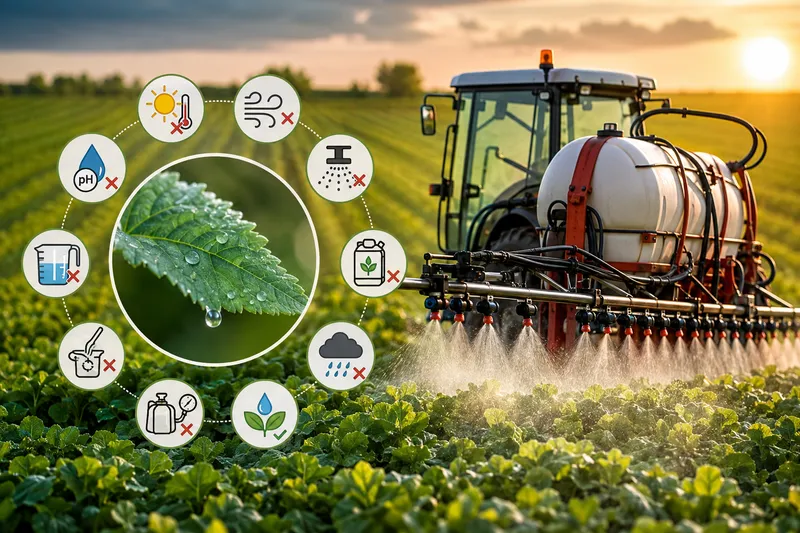
Proper Spraying: 10 Common Mistakes That Reduce Pesticide Effectiveness
Learn the 10 most common spraying mistakes that reduce pesticide performance and discover practical solutions to improve crop protection and spraying efficiency.
Proper Spraying: 10 Common Mistakes That Reduce Pesticide Effectiveness
What Is Proper Spraying?
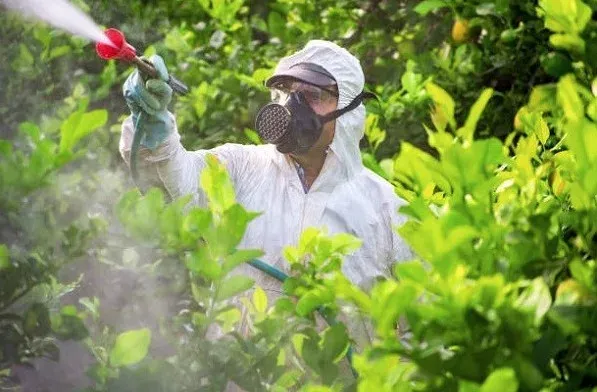
Proper spraying refers to the correct application of pesticides using the appropriate equipment, water quality, weather conditions, application timing, and recommended dosage. Following these principles ensures maximum pesticide performance while reducing costs, environmental impact, and crop losses.
Table of Contents
- Why Proper Spraying Matters
- Why Many Spray Applications Fail
- Mistake #1: Spraying During the Hottest Hours
- Mistake #2: Ignoring Wind Speed
- Mistake #3: Using Poor-Quality Water
- Best Practices for Effective Spraying
- Frequently Asked Questions
Introduction
Modern agriculture depends heavily on effective crop protection. Every year, farmers invest significant amounts of money in insecticides, fungicides, herbicides, and other crop protection products to protect their fields from pests, diseases, and weeds.
However, purchasing a high-quality pesticide alone does not guarantee successful control. In many cases, poor spraying practices—not the pesticide itself—are responsible for disappointing results.
Improper spraying techniques can dramatically reduce pesticide performance, leading to repeated applications, higher production costs, lower yields, and increased pest resistance.
Factors such as application timing, weather conditions, spray equipment, water quality, nozzle selection, and sprayer calibration all play essential roles in determining whether a pesticide reaches its intended target.
Understanding these factors allows growers to maximize pesticide efficiency while minimizing waste, environmental contamination, and unnecessary expenses.
In this comprehensive guide, we will examine ten common spraying mistakes that reduce pesticide effectiveness and explain practical solutions that every farmer can implement to improve crop protection.
Why Proper Spraying Matters
The primary goal of pesticide application is simple:
Deliver the correct amount of active ingredient to the target surface.
Unfortunately, this objective is often compromised because many variables influence spray quality.
Poor spraying practices can result in:
- Uneven spray coverage
- Increased pesticide waste
- Drift onto neighboring crops
- Reduced pest control
- Crop injury
- Additional spraying costs
- Environmental pollution
When spraying is performed correctly, farmers benefit from:
- Better pest management
- Lower production costs
- Reduced pesticide consumption
- Improved crop quality
- Increased yield
- Better environmental protection
For these reasons, professional spraying techniques are considered just as important as selecting the right pesticide.
Why Many Spray Applications Fail
Agricultural extension specialists consistently report that most unsuccessful pesticide applications are caused by operational mistakes rather than poor-quality products.
The most common reasons include:
- Incorrect spraying time
- High temperatures
- Strong wind
- Improper nozzle selection
- Poor water quality
- Incorrect pesticide dosage
- Lack of sprayer maintenance
- Poor equipment calibration
Correcting these mistakes often improves spraying efficiency without increasing pesticide usage.
Mistake #1 – Spraying During the Hottest Hours of the Day
One of the most frequent mistakes is applying pesticides during midday when temperatures are at their highest.
High temperatures accelerate evaporation before spray droplets can properly settle on plant surfaces.
As droplets shrink during evaporation:
- Spray coverage decreases.
- Less active ingredient reaches the target.
- Pest control becomes less effective.
- Repeat applications become necessary.
Certain crops may also experience leaf burn when sprayed under intense sunlight.
Best Time for Spraying
Professional recommendations suggest spraying:
- Early morning
- Late afternoon
- During moderate temperatures below approximately 30°C
These conditions improve droplet retention and increase pesticide absorption.
Mistake #2 – Ignoring Wind Speed
Wind significantly influences spray quality.
Even a well-calibrated sprayer cannot produce effective coverage if droplets are carried away before reaching the crop.
This phenomenon is known as spray drift.
Spray drift can cause:
- Reduced pesticide deposition
- Poor pest control
- Higher pesticide costs
- Damage to neighboring crops
- Contamination of water sources
- Harm to beneficial insects such as bees
Recommended Wind Conditions
Most agricultural specialists recommend avoiding spraying when wind speeds exceed approximately 10–15 km/h, although acceptable limits vary depending on nozzle type and droplet size.
Reducing Spray Drift
Farmers can reduce drift by:
- Using air-induction nozzles
- Lowering boom height
- Selecting larger droplet sizes when appropriate
- Reducing spray pressure
- Spraying during calm weather conditions
Mistake #3 – Using Poor Water Quality
Water is often overlooked, yet it is one of the most important components of every spray mixture.
The chemical characteristics of water directly influence pesticide stability and performance.
Three factors deserve particular attention:
Water Hardness
Hard water contains elevated levels of calcium and magnesium ions.
Some pesticides bind with these minerals, reducing the amount of active ingredient available for pest control.
Water pH
Many pesticides degrade rapidly in alkaline water.
If the spray solution has a high pH, the active ingredient may begin breaking down before application even starts.
Water conditioners or pH-adjusting products may be recommended depending on the pesticide label.
Suspended Particles
Dirty or muddy water may:
- Reduce pesticide performance
- Clog filters
- Block spray nozzles
- Create uneven spray patterns
For this reason, clean water should always be used when preparing spray solutions.
Professional Tip
Before mixing pesticides, consider testing:
- Water pH
- Water hardness
- Water cleanliness
A simple water analysis can significantly improve pesticide performance while reducing unnecessary applications.
Mistake #4 – Using the Wrong Spray Nozzle
A spray nozzle is one of the most critical components of any spraying system. Regardless of the quality of the pesticide being used, selecting the wrong nozzle can significantly reduce spray coverage, increase drift, and lower overall application efficiency.
Many growers focus on choosing the right pesticide but overlook the importance of nozzle selection. In reality, the nozzle determines droplet size, spray pattern, application rate, and coverage uniformity.
An incorrect nozzle can cause:
- Uneven spray distribution
- Excessive spray drift
- Poor leaf coverage
- Reduced pesticide deposition
- Higher pesticide consumption
- Increased operating costs
Why Nozzle Selection Matters
Each pesticide category requires a different spray pattern.
For example:
- Herbicides generally require larger droplets to minimize drift.
- Fungicides require finer droplets to improve leaf coverage.
- Insecticides often require droplets capable of penetrating dense crop canopies.
Using a nozzle designed for herbicides while applying a fungicide may drastically reduce disease control.
Common Types of Spray Nozzles
| Nozzle Type | Primary Use | Advantages |
|---|---|---|
| Flat Fan | General spraying and herbicides | Uniform coverage across flat surfaces |
| Hollow Cone | Fungicides and insecticides | Excellent penetration into crop canopies |
| Full Cone | Orchards and tree crops | Dense, even spray coverage |
| Air-Induction | Windy conditions | Significantly reduces spray drift |
| Twin Fan | Dense foliage | Improves coverage on both sides of leaves |
Signs That a Nozzle Should Be Replaced
Many farmers continue using worn nozzles without realizing that spray output changes over time.
Replace spray nozzles if you notice:
- Irregular spray patterns
- Increased flow rate
- Uneven droplet distribution
- Visible wear around the nozzle opening
- Frequent clogging
A nozzle delivering more than 10% above its rated flow should generally be replaced.
Professional Recommendation
Inspect nozzle performance before every spraying season.
Replacing inexpensive worn nozzles can dramatically improve pesticide performance while reducing chemical waste.
Mistake #5 – Applying the Wrong Dosage
One of the most widespread misconceptions in agriculture is that using more pesticide automatically produces better results.
This assumption is incorrect.
Every registered pesticide has undergone extensive scientific testing to determine the optimal application rate.
Applying less or more than the recommended dosage reduces effectiveness and may create additional problems.
Problems Caused by Under-Dosing
Using too little pesticide may result in:
- Poor pest control
- Surviving pest populations
- Faster development of pesticide resistance
- More frequent spray applications
- Increased long-term production costs
Problems Caused by Over-Dosing
Applying excessive pesticide can lead to:
- Crop injury
- Higher production costs
- Increased pesticide residues
- Environmental contamination
- Damage to beneficial insects
- Regulatory compliance issues
More pesticide does not necessarily mean better control.
Instead, it often increases risk without improving performance.
How to Calculate the Correct Dosage
Before preparing a spray solution, determine:
- Total field area
- Sprayer tank capacity
- Spray volume per hectare
- Label-recommended application rate
Accurate measurements help avoid unnecessary pesticide waste while ensuring effective crop protection.
Always follow the pesticide label and local agricultural recommendations.
Mistake #6 – Improper Tank Mixing
Tank mixing allows growers to apply multiple products in a single operation, reducing labor costs and field traffic.
However, mixing incompatible pesticides or fertilizers can significantly reduce product performance and even damage crops.
Many pesticide failures occur because incompatible products react chemically inside the spray tank.
Potential Problems Caused by Improper Mixing
Improper tank mixing may result in:
- Chemical precipitation
- Reduced pesticide effectiveness
- Nozzle blockage
- Crop phytotoxicity
- Foam formation
- Separation of spray solution
- Reduced stability of active ingredients
Always Perform a Jar Test
Before mixing products in a full spray tank, perform a simple compatibility test.
A jar test involves mixing small amounts of each product in the same proportion that will be used in the field.
If you observe:
- Sedimentation
- Layer separation
- Excessive foaming
- Heat generation
- Thick gel formation
the products should not be mixed together.
Recommended Mixing Order
Following the correct mixing sequence helps prevent compatibility issues.
A common mixing order is:
- Fill the tank halfway with clean water.
- Add water-dispersible granules (WG/WDG).
- Add wettable powders (WP).
- Add suspension concentrates (SC).
- Add emulsifiable concentrates (EC).
- Add soluble liquids (SL).
- Add adjuvants and spray oils last.
- Fill the remainder of the tank with water while maintaining agitation.
Always verify the recommended mixing order on each product label.
Mistake #7 – Inadequate Sprayer Cleaning
Cleaning the sprayer after each application is essential for maintaining equipment performance and preventing crop damage.
Residual pesticides remaining inside the tank, hoses, filters, and nozzles can contaminate future spray mixtures.
This is particularly important when switching between herbicides, insecticides, or fungicides.
Consequences of Poor Cleaning
Improper cleaning may cause:
- Cross-contamination
- Crop injury
- Chemical incompatibility
- Nozzle clogging
- Reduced pesticide effectiveness
- Equipment corrosion
Even small pesticide residues may damage sensitive crops.
Proper Cleaning Procedure
Professional sprayer cleaning involves several steps:
- Completely empty the spray tank.
- Rinse with clean water.
- Add an approved tank-cleaning solution if required.
- Circulate the cleaning solution through hoses and nozzles.
- Drain completely.
- Perform a final rinse with clean water.
Cleaning immediately after spraying is much easier than removing dried pesticide residues later.
Understanding Droplet Size
Droplet size is one of the most important factors influencing spray performance.
Different droplet sizes provide different advantages depending on crop type, pesticide category, and weather conditions.
| Droplet Size | Characteristics | Best Application |
|---|---|---|
| Very Fine | Excellent coverage, high drift risk | Fungicides in calm conditions |
| Fine | Good penetration | Insecticides |
| Medium | Balanced coverage and drift control | General pesticide applications |
| Coarse | Lower drift | Herbicides |
| Very Coarse | Minimal drift | Windy conditions and soil-applied herbicides |
Choosing the appropriate droplet size improves pesticide deposition while minimizing environmental contamination.
Professional Tips for Better Spray Performance
Professional applicators consistently achieve better results by following a few simple practices:
- Inspect nozzles before every application.
- Replace worn nozzles immediately.
- Maintain constant spray pressure.
- Use clean, high-quality water.
- Follow label recommendations precisely.
- Perform compatibility tests before tank mixing.
- Keep agitation running throughout the mixing process.
- Clean spraying equipment immediately after use.
Key Takeaway
Many pesticide failures are not caused by poor-quality products but by equipment-related issues. Proper nozzle selection, accurate dosage, safe tank mixing, and thorough sprayer cleaning are essential practices that improve pesticide performance, reduce waste, and support sustainable crop production.
Mistake #8 – Applying Pesticides at the Wrong Pest Growth Stage
Timing is one of the most important factors in successful pest management. Even the most effective pesticide may produce unsatisfactory results if it is applied when the target pest or disease is at the wrong stage of development.
Most insects are far more susceptible during their early larval or nymph stages than when they reach adulthood. Likewise, many fungal diseases are much easier to control before symptoms become severe. Delaying treatment often allows pest populations to increase and disease infections to spread, making control more difficult and costly.
Consequences of Late Applications
Applying pesticides too late can result in:
- Reduced control efficiency
- Higher crop damage
- Increased pesticide use
- More frequent spray applications
- Greater risk of pesticide resistance
- Lower crop quality and yield
Best Practice
Regular crop scouting is essential. Farmers should monitor pest populations, identify economic threshold levels, and apply pesticides before infestations become severe.
Early intervention generally delivers better results while reducing production costs.
Mistake #9 – Ignoring Weather Conditions
Weather conditions have a direct impact on pesticide performance.
Temperature, humidity, wind speed, and rainfall all influence how effectively spray droplets reach and remain on plant surfaces.
Ignoring weather forecasts can significantly reduce spraying efficiency.
Rainfall After Spraying
Rain is one of the most common reasons for pesticide failure.
If rainfall occurs shortly after application, spray deposits may be washed off before the active ingredient has enough time to penetrate plant tissues or contact the target pest.
Always check the rainfast period listed on the pesticide label.
Depending on the product, pesticides may require anywhere from several hours to a full day before rainfall will no longer affect their performance.
Temperature
Extremely high temperatures increase evaporation, while very low temperatures may reduce pest activity and slow pesticide absorption.
Most pesticide applications perform best under moderate temperatures.
Relative Humidity
Moderate humidity helps spray droplets remain on leaf surfaces longer, allowing better absorption.
Very dry air increases evaporation and reduces spray retention.
Ideal Weather Conditions for Spraying
| Weather Factor | Recommended Conditions |
|---|---|
| Air Temperature | 18–28°C |
| Relative Humidity | 50–80% |
| Wind Speed | Below 10–15 km/h |
| Rain Forecast | No rainfall expected during the recommended rainfast period |
| Sunlight | Early morning or late afternoon |
Mistake #10 – Failing to Calibrate the Sprayer
Sprayer calibration is one of the most overlooked yet most important aspects of pesticide application.
Calibration ensures that the correct amount of spray solution is delivered uniformly across the field.
Without proper calibration, some plants receive too much pesticide while others receive too little.
This inconsistency reduces pest control, wastes pesticides, and increases production costs.
Benefits of Proper Calibration
A properly calibrated sprayer provides:
- Uniform spray coverage
- Accurate pesticide dosage
- Reduced chemical waste
- Lower production costs
- Improved pest control
- Better crop safety
- Increased environmental protection
When Should a Sprayer Be Calibrated?
Calibration should always be performed:
- Before the beginning of each growing season
- After replacing nozzles
- After equipment repairs
- When changing spray pressure
- Before switching to a different crop
- Whenever application speed changes
Routine calibration helps maintain consistent application quality throughout the season.
Pre-Spraying Checklist
Before preparing a spray solution, inspect the following items:
✔ Spray nozzles are clean and undamaged.
✔ Pressure gauge is functioning properly.
✔ Water quality is suitable.
✔ Weather forecast is favorable.
✔ Wind speed is within acceptable limits.
✔ Correct pesticide dosage has been calculated.
✔ Spray tank is completely clean.
✔ Personal protective equipment is available.
✔ Crop growth stage has been evaluated.
✔ Pest population has reached the economic threshold.
Completing this checklist before every application helps prevent many common spraying errors.
Do's and Don'ts of Proper Spraying
| Do | Don't |
|---|---|
| Spray during cool hours | Spray during extreme heat |
| Use clean water | Use muddy or contaminated water |
| Follow label recommendations | Guess application rates |
| Calibrate the sprayer regularly | Ignore equipment maintenance |
| Monitor weather forecasts | Spray before rainfall |
| Select the correct nozzle | Use worn or damaged nozzles |
| Perform compatibility tests | Mix products without testing |
| Clean equipment after every use | Leave pesticide residues inside the tank |
Expert Recommendations
Professional applicators follow several practices that consistently improve spraying performance:
- Scout fields regularly before deciding to spray.
- Rotate pesticide modes of action to delay resistance development.
- Replace worn nozzles every season or when output exceeds acceptable limits.
- Maintain constant travel speed during spraying.
- Keep spray pressure within the recommended range.
- Record every pesticide application, including weather conditions, products used, and application rates.
- Service spraying equipment annually.
These simple practices can significantly improve pesticide performance while reducing unnecessary costs.
Conclusion
Proper pesticide application involves much more than simply filling a sprayer and entering the field.
Successful spraying requires careful planning, proper equipment maintenance, correct nozzle selection, high-quality water, accurate dosage, suitable weather conditions, and timely applications.
By avoiding the ten common mistakes discussed in this guide, growers can maximize pesticide effectiveness, reduce production costs, minimize environmental impact, and improve crop yield and quality.
Modern agriculture increasingly depends on precision and efficiency. Proper spraying is one of the most practical and cost-effective ways to achieve both.
Frequently Asked Questions (FAQ)
What is the best time of day to spray pesticides?
Early morning or late afternoon, when temperatures are lower, wind speeds are minimal, and evaporation rates are reduced.
Does water quality affect pesticide performance?
Yes. Water hardness, pH, and suspended particles can significantly reduce pesticide effectiveness and should be evaluated before mixing spray solutions.
Can different pesticides be mixed together?
Only if they are chemically and physically compatible. Always perform a jar test and follow the recommendations provided on product labels.
How often should spray nozzles be replaced?
Nozzles should be inspected regularly and replaced whenever wear causes the flow rate to increase by more than 10% or when spray patterns become uneven.
Why is sprayer calibration important?
Calibration ensures accurate pesticide application, improves spray coverage, reduces chemical waste, and enhances overall pest control efficiency.